
















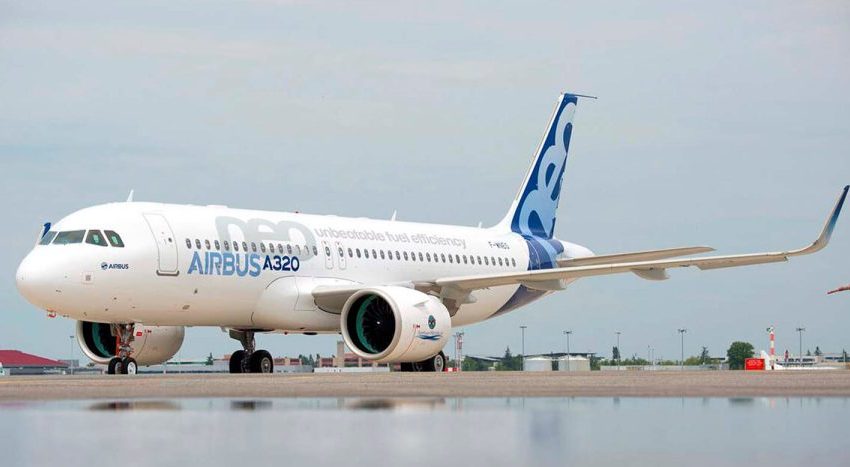
The large-scale recall affecting thousands of Airbus A320 family aircraft has raised unprecedented questions about the nature of emerging risks facing modern aviation. Far beyond traditional mechanical failures or human error, the crisis has highlighted a more complex challenge: the vulnerability of highly digitalized aircraft systems to cosmic radiation and the growing dependence of commercial aviation on software that increasingly serves as the true brain of modern aircraft.
The warning triggered a global response from regulators and airlines after a flaw was identified in flight-control systems, prompting one of the largest software-related corrective actions in recent aviation history.
A Threat Coming from Space
What makes this crisis particularly unusual is that the source of concern did not originate inside the aircraft itself, but in the environment through which it operates.
According to technical assessments linked to the issue, charged particles generated by solar activity and cosmic radiation may affect sensitive electronic systems while aircraft are operating at cruising altitudes above 28,000 feet.
This phenomenon is known as a Single Event Upset (SEU), in which a high-energy particle temporarily alters the electronic state of memory chips, potentially corrupting critical data used by flight-control systems.
While the phenomenon has long been recognized in the space and satellite industries, its possible implications for commercial aviation have reignited debate over the resilience of digital systems in an era increasingly defined by intelligent aircraft and automated flight technologies.
The Incident That Triggered the Alarm
The issue did not emerge from a theoretical study or laboratory simulation. It gained urgency following a real-world aviation incident that prompted regulators and manufacturers to take action.
During a JetBlue Airbus A320 flight operating between Cancun and New York, the aircraft reportedly experienced a sudden and unexpected nose-down movement while cruising at 35,000 feet.
The event resulted in a rapid loss of altitude and minor injuries among passengers before the flight crew successfully regained control and diverted the aircraft for an emergency landing.
Subsequent investigations focused on the Elevator Aileron Computer, or ELAC, particularly a newer software configuration installed on certain aircraft.
ELAC: The Aircraft’s Digital Brain
The ELAC system is among the most critical components within the Airbus A320 flight-control architecture.
Unlike older aircraft that relied heavily on direct mechanical controls, Airbus aircraft use a Fly-by-Wire system in which pilot inputs are processed electronically before being transmitted to control surfaces.
The ELAC computer converts movements of the side-stick controller into digital commands that operate the elevators and ailerons, which govern the aircraft’s pitch, roll and overall flight attitude.
For this reason, aviation safety authorities warned that any corruption of data within the system could, under exceptional circumstances, generate unexpected control inputs capable of affecting aircraft stability.
A Race Against Time
Faced with the scale of the affected fleet, airlines around the world found themselves engaged in a major logistical challenge.
For most modern aircraft, the solution involved reverting to a previous, more stable software version through a rollback process requiring only a few hours. This enabled major operators such as IndiGo and American Airlines to conduct repairs overnight and minimize disruption to flight schedules.
Older aircraft, however, faced a more complicated process. In some cases, software updates alone were insufficient, requiring hardware modifications because certain electronic components were incompatible with the revised software configuration.
As a result, some aircraft remained grounded for longer periods while replacement parts were sourced and maintenance work completed.
A Crisis at the Worst Possible Time
The timing of the recall could hardly have been worse for the global aviation industry.
In the United States, corrective work coincided with one of the busiest holiday travel periods of the year. Across Asia, airlines faced similar pressure as demand for regional travel surged.
Maintenance teams were forced to work around the clock to prevent widespread cancellations and delays that could have affected millions of passengers.
The issue also emerged only weeks after the Airbus A320 family reinforced its position as one of the most commercially successful and widely operated aircraft programs in aviation history.
What Does the Crisis Reveal?
Beyond the immediate technical concerns, the incident highlights a deeper transformation in the nature of aviation risk.
In the past, aircraft safety was primarily associated with engines, airframes and mechanical systems. Today, software, computer networks and digital control architectures have become just as critical to flight safety as wings and engines.
As artificial intelligence, automation and increasingly sophisticated digital systems become more deeply integrated into aviation, experts believe that software reliability, cyber resilience and protection against electronic interference will become central safety concerns for decades to come.
A Safer Future or a More Complex One?
Although the large-scale recall demonstrated the effectiveness of global aviation safety mechanisms and their ability to act before more serious incidents occurred, it also exposed the vulnerability of digital systems to threats that receive relatively little public attention.
In an era in which aircraft rely on millions of lines of code and thousands of microelectronic components, aviation risks are no longer confined to traditional mechanical failures. They now extend into new domains that range from computer memory chips to particles originating from solar activity in deep space.
For many analysts, the Airbus A320 crisis represents more than a temporary technical problem. It serves as an early warning of the challenges likely to define aviation in the age of full digital transformation, where the reliability of software may become just as important as the structural integrity of the aircraft itself.