










Nigeria has formally applied to join the International Energy Agency as an associate member, in a strategic move that comes during one of the most volatile periods in the global energy market in recent years.
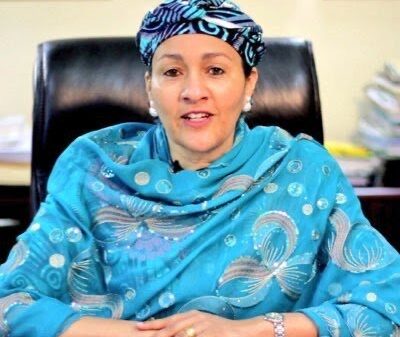
The application was submitted on Wednesday, May 13, 2026, through a letter signed by Ekperikpe Ekpo. The initiative was welcomed by Executive Director Fatih Birol, signaling growing international recognition of Nigeria’s evolving role in global energy governance.
If approved, Nigeria would become the first major sub-Saharan African oil producer to join the agency as an associate member, strengthening cooperation between energy-consuming nations and emerging producers.
Global energy crisis drives strategic realignment
Nigeria’s request comes amid escalating instability in the Middle East and a deepening global oil supply crisis linked to the ongoing conflict involving the United States, Israel, and Iran.
In its latest monthly report released alongside Nigeria’s application, the International Energy Agency warned of an “unprecedented supply shock” affecting global crude markets.
According to the agency, global oil supply in 2026 is expected to fall by about 1.78 million barrels per day below projected demand due to severe restrictions on tanker movements through the strategically vital Strait of Hormuz.
More than 14 million barrels per day of crude exports are currently estimated to be disrupted, while cumulative supply losses from Gulf producers have exceeded one billion barrels since the escalation began.
The turmoil drove oil prices sharply higher earlier in the year, with benchmarks approaching $150 per barrel in April before easing to around $120 in early May.
Nigeria moves to capitalize on high prices
As global markets tighten, Nigeria is working to stabilize and increase crude output to benefit from elevated international prices.
According to the latest monthly report from the Organization of the Petroleum Exporting Countries, Nigeria’s crude production rose to 1.488 million barrels per day in April 2026.
Although this remains slightly below the official quota of 1.5 million barrels per day, it marks one of the country’s strongest recent performances.
Including condensates, total liquid output reached about 1.66 million barrels per day, the highest level so far this year.
Analysts say sustained production growth could significantly strengthen Nigeria’s fiscal position if high prices persist through 2026.
Expanding Nigeria’s role in global energy governance
Associate membership would give Nigeria broader access to international energy data, emergency coordination mechanisms, policy analysis, and technical cooperation frameworks.
The move also reflects Nigeria’s effort to diversify energy partnerships beyond its traditional alignment with the Organization of the Petroleum Exporting Countries.
Through the framework, Nigeria would deepen cooperation with major emerging economies linked to the agency, including Brazil, China, and South Africa.
Officials say the partnership could support long-term energy transition goals, particularly in renewable energy development, natural gas utilization, and clean cooking initiatives aimed at reducing reliance on biomass.
The government has increasingly emphasized gas infrastructure and energy access as key pillars of economic policy.
Domestic energy sector under scrutiny
Nigeria’s application coincides with major developments in its domestic energy sector.
The Dangote refinery remains central to efforts to improve fuel security and reduce dependence on imported refined products.
Recent developments indicate a growing strategic focus on compressed natural gas investments as part of a broader gas transition agenda.
At the same time, the government has intensified anti-corruption enforcement in the power and infrastructure sectors.
On May 14, 2026, a former power minister received a record prison sentence over alleged diversion of funds linked to the Mambilla and Zungeru hydroelectric projects, in one of the most significant infrastructure corruption cases in recent years.
Observers view the prosecution as part of broader efforts to restore investor confidence and strengthen accountability in the energy sector.
Strategic timing for Nigeria
Nigeria’s bid for associate membership comes at a critical moment for the global energy system, as geopolitical instability, energy security concerns, and transition pressures reshape alliances among producers and consumers.
For Nigeria, deeper engagement with the agency could enhance its international standing while providing strategic policy tools to navigate an increasingly uncertain energy landscape.