



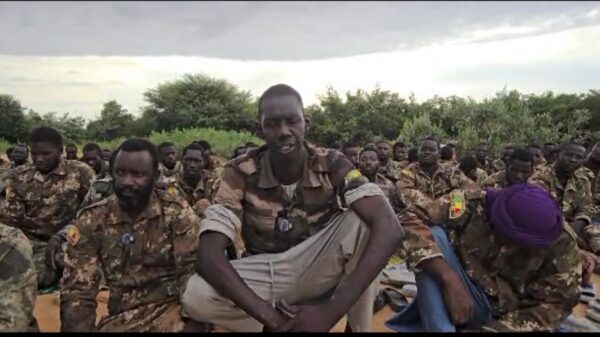




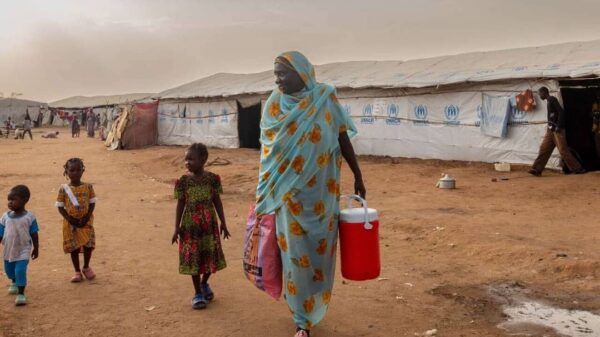



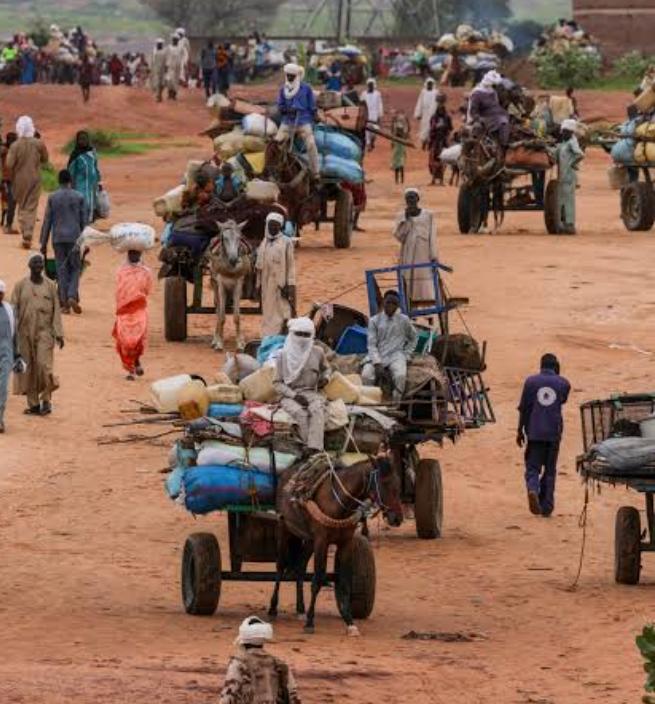
Eastern Chad is facing a rapidly escalating health emergency that is straining an already fragile humanitarian system, as a dual outbreak of meningitis and measles spreads among nearly 1.3 million refugees who have fled ongoing conflict in neighboring Sudan.
Medical organizations, including Doctors Without Borders, alongside the Chadian Ministry of Health, warn the situation has reached a critical tipping point, with overcrowding, malnutrition and limited healthcare capacity accelerating transmission and increasing mortality rates, particularly among children.
Meningitis has emerged as the deadliest component of the crisis, with data from Doctors Without Borders between March and mid-April showing that nearly 12% of infected children admitted to its facilities have died, representing 25 deaths out of 212 recorded cases.
In the border town of Adré, a primary entry point for refugees, healthcare facilities are overwhelmed, with bed capacity for meningitis patients fully saturated, forcing medical teams to triage care and limiting their ability to treat other conditions.
Cases have surged sharply, rising from just 18 in January to more than 100 by mid-April, reflecting the rapid spread of the disease in densely populated settlements.
At the same time, measles is spreading rapidly, particularly in informal sites where thousands of new arrivals await relocation, with cases increasing from 16 in January to 371 in March and a further 161 cases recorded in the first half of April.
Health workers report severe complications among infected children, including pneumonia requiring urgent oxygen support and hospitalization, worsened by delayed access to care and weakened immunity.
Humanitarian agencies attribute the outbreak to a convergence of structural factors, as more than 918,000 refugees have entered eastern Chad since conflict erupted in Sudan in 2023, overwhelming local infrastructure in regions such as Ouaddaï, Sila and Wadi Fira.
Malnutrition rates among children under five remain alarmingly high, reducing resistance to infectious diseases, while cross-border transmission continues as families arrive from areas in Sudan where healthcare systems have collapsed.
Chad’s health system is under severe strain, with only one doctor for every 18,000 people, far below the minimum threshold recommended by the World Health Organization.
Humanitarian actors, including UNHCR and national authorities, have launched emergency interventions to contain the outbreak.
Over the past three weeks, around 95,500 children have been vaccinated against measles, while more than 337,800 people have received meningitis vaccines.
However, logistical challenges threaten these efforts, with Doctors Without Borders reporting ongoing difficulties in maintaining vaccine cold chains under extreme desert temperatures.
Efforts are also underway to relocate refugees from overcrowded border areas such as Adré to more established sites like Zabout, but continued arrivals are complicating containment strategies.
The humanitarian outlook remains fragile, with UNICEF appealing for $61.2 million to sustain emergency health interventions through the end of 2026, warning that without urgent funding the crisis could worsen significantly.
Projections suggest the refugee population in Chad could reach 1.48 million by December, increasing pressure on already overstretched services.
Aid agencies stress that vaccination campaigns and relocation efforts are essential but must be rapidly scaled up and supported by sustained international funding.
Field workers warn the dual outbreak is no longer a looming threat but an active emergency unfolding in real time, with the potential to sharply increase mortality rates and destabilize the region.