









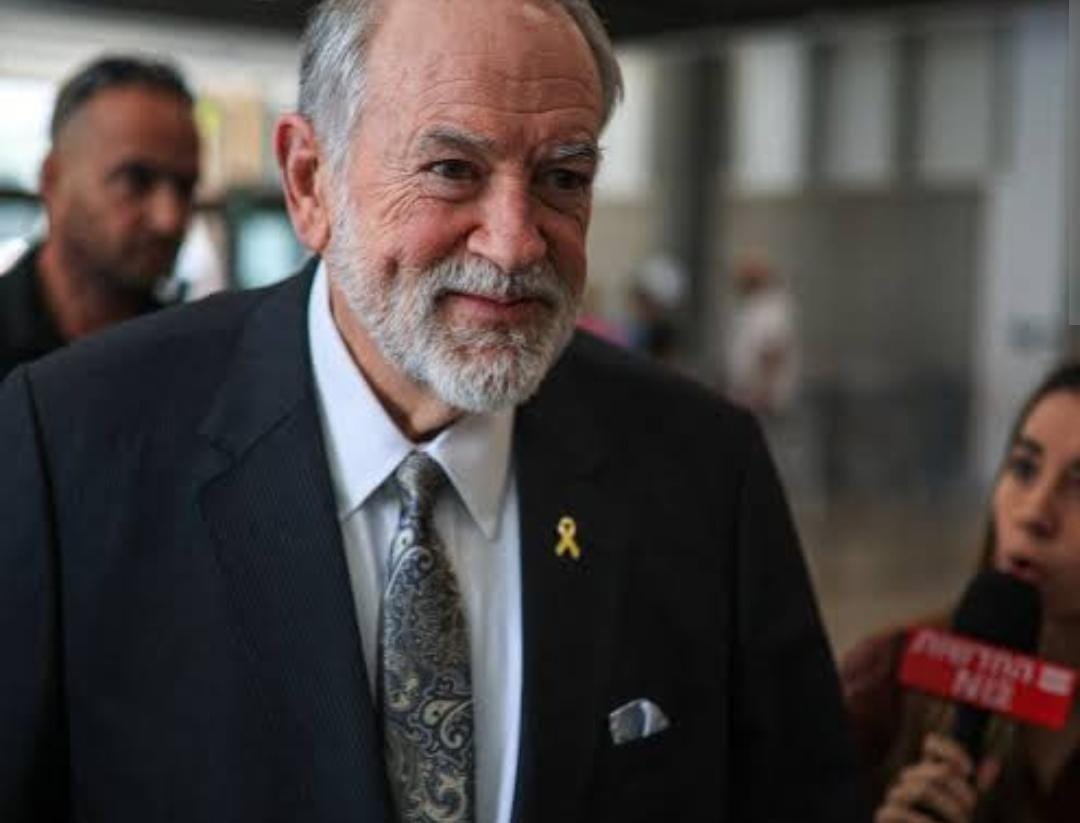
In a wide-ranging and at times controversial interview aired Friday, February 20, U.S. Ambassador to Israel Mike Huckabee ignited debate over Israel’s borders, U.S. diplomatic priorities, and Washington’s approach to international legal institutions.
The interview, conducted by political commentator Tucker Carlson at Ben Gurion Airport, comes amid heightened regional tensions and new diplomatic initiatives spearheaded by President Donald Trump.
“From the Nile to the Euphrates” Comment Draws Attention
During the discussion, Carlson asked Huckabee about the biblical land grant described in Genesis 15, often summarized as stretching from the Nile River in Egypt to the Euphrates River in Iraq. When pressed on whether he would object to Israel taking “it all,” Huckabee responded, “It would be fine if they took it all.”
The remark prompted visible surprise from Carlson and quickly drew scrutiny online and among diplomatic observers.
Huckabee later characterized the statement as “hyperbolic,” clarifying that the Israeli government is not currently seeking expansion to ancient biblical borders and that its primary objective is to live in peace within its existing territory.
The exchange underscores ongoing ideological divisions within segments of the Republican coalition. Carlson has been increasingly critical of what he describes as “unconditional support” for Israel, while Huckabee has long been identified with Christian Zionist advocacy.
Meeting With Jonathan Pollard Raises Internal Concerns
The interview also revisited Huckabee’s July 2025 meeting with Jonathan Pollard, a former U.S. Navy intelligence analyst who served 30 years in prison for spying for Israel.
Huckabee confirmed that he hosted Pollard at the U.S. Embassy in Jerusalem and stated, “I don’t regret it.” According to Huckabee, Pollard sought to express gratitude for the ambassador’s past advocacy efforts related to his release.
However, the meeting reportedly was not listed on the official schedule and generated concern within the CIA and the White House. Officials were said to be alarmed that a convicted spy had been hosted inside a U.S. government facility—marking a rare and symbolically sensitive encounter.
Regional Backdrop: Diplomacy and Escalation
Huckabee’s comments come at a time of elevated tensions across the region.
The “Board of Peace”
On February 19, President Trump chaired the inaugural session of a new diplomatic initiative known as the “Board of Peace” in Washington. The body announced approximately $7 billion in recovery pledges for Gaza.
While administration officials describe the effort as a pragmatic reconstruction framework, it has drawn skepticism from Hamas, which demands a full halt to hostilities, and from several European allies concerned about the marginalization of United Nations mechanisms in the recovery process.
Strikes in Lebanon
On February 21, Israeli airstrikes in eastern Lebanon—including the areas of Baalbek and Rayak—reportedly killed at least 10 people, including members of Hezbollah. The Israeli military stated that the strikes targeted a missile unit allegedly preparing attacks. Lebanese officials condemned the operation and called for a suspension of committee-level talks until what they described as “aggression” ceases.
Criticism of International Courts
In the interview, Huckabee also praised the Trump administration’s efforts to “get rid of” the International Criminal Court (ICC) and the International Court of Justice (ICJ), referring to them as “rogue organizations.”
The comments reflect ongoing friction between Washington and international legal bodies over jurisdiction, war crimes investigations, and sovereignty concerns—particularly in cases involving Israel and U.S. personnel.
Political and Diplomatic Implications
Taken together, Huckabee’s remarks, the Pollard meeting, and the evolving diplomatic initiatives signal a period of recalibration and controversy in U.S. Middle East policy.
While Huckabee later framed his biblical-border comment as rhetorical exaggeration, its initial phrasing has already fueled debate over U.S. diplomatic messaging, the boundaries of political support for Israel, and the broader strategic direction of American engagement in the region.
As reconstruction plans for Gaza move forward and regional military activity intensifies, the interview is likely to remain a focal point in discussions about the balance between ideological alignment and diplomatic pragmatism in U.S.-Israel relations.