








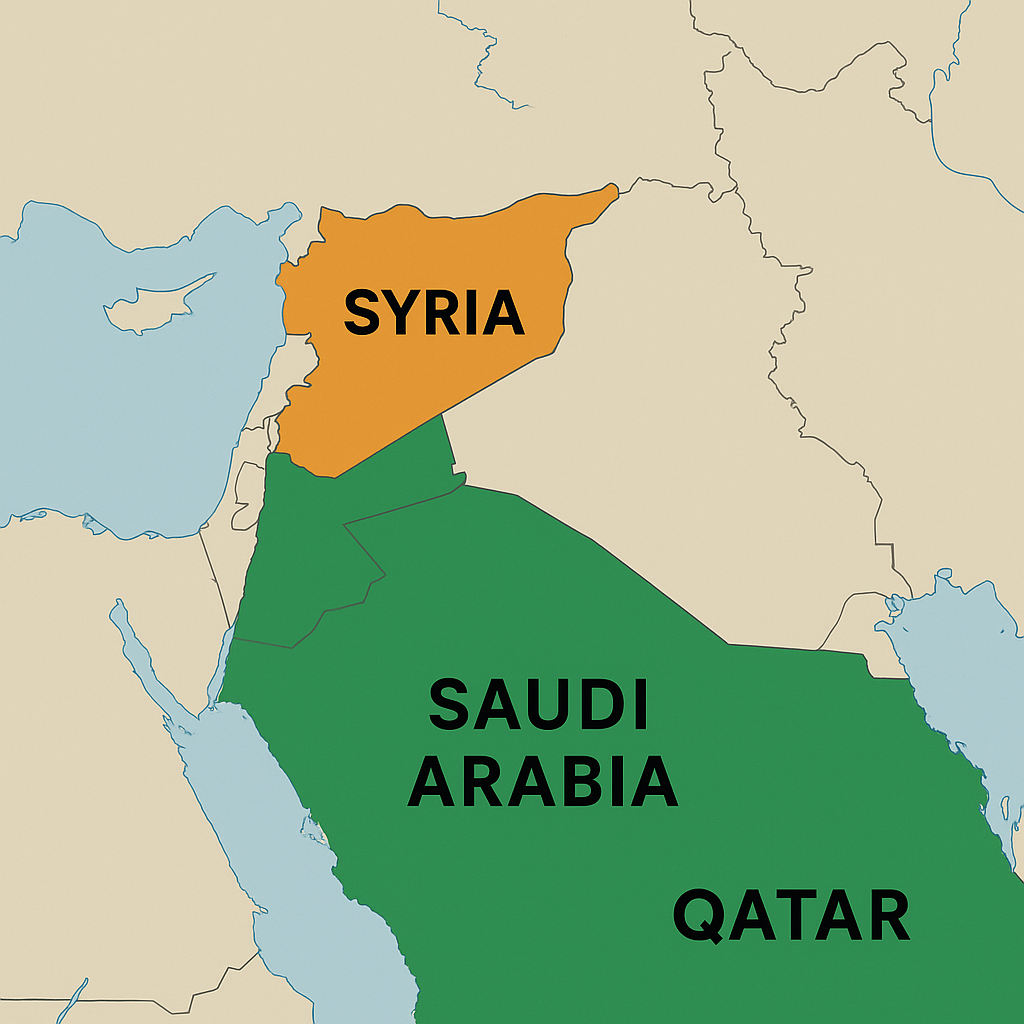
In a rare move in the Arab East, Saudi Arabia and Qatar announced on Sunday, April 27, that they would jointly settle Syria’s outstanding debt to the World Bank, amounting to approximately $15 million, according to a joint statement published by the official Saudi Press Agency (SPA).
Though the amount may seem symbolic compared to the estimated $400 billion needed to rebuild war-torn Syria, the initiative has sparked debate over its true political objectives and timing.
In an interview with France 24, political analyst Karim Sader, an expert on Gulf affairs, described the move as part of a strategic repositioning by Riyadh in the new Syrian landscape.
Post-Assad Syria: A Stage for Saudi Influence
Sader notes that Saudi Arabia is seeking to reassert itself in a Syria no longer under Iranian dominance or Alawite rule.
“By reconnecting Syria with the World Bank and international institutions, Riyadh grants legitimacy to the new Syrian authorities,” he explains.
Supporting a centralized Syrian state, he argues, is also a way to counter fragmentation and extend Saudi influence toward the Eastern Mediterranean, including Lebanon and potentially Gaza.
A Lucrative Reconstruction Market
Sader highlights the economic opportunity Syria presents.
“By paying off the debt, Riyadh and Doha secure early access to future international funding and lucrative reconstruction contracts.”
Riyadh–Doha Cooperation: More Than Symbolic
Saudi Arabia’s coordination with Qatar, despite past tensions, is a calculated diplomatic maneuver, Sader argues.
“Riyadh aims to loosen Doha’s dependency on Turkey,” he says, pointing out Qatar’s balanced diplomacy and cautious stance toward Saudi Arabia and the US.
Decline of the Shiite Crescent: A Saudi Window
With Iranian influence waning in the Levant, Saudi Arabia sees a chance to fill the vacuum, Sader asserts.
“The traditional Shiite Crescent, stretching from Tehran to Beirut, is crumbling—and Riyadh is moving in as a moderate Sunni alternative.”
Strategic Vision: Rebuilding and Realignment
Sader sees this move as part of an implicit pact between the US, Gulf states, and Israel: while one bloc weakens Iranian proxies militarily, the other invests in rebuilding, paving the way toward a broader normalization—possibly between Riyadh and Tel Aviv.