











Diplomatic activity surrounding escalating tensions in the Strait of Hormuz intensified as China renewed calls for an immediate ceasefire, while the United States continued military operations aimed at securing commercial navigation through one of the world’s most strategically important maritime corridors.
According to statements from China’s Ministry of Foreign Affairs, Wang Yi held talks in Beijing with Iranian Foreign Minister Abbas Araghchi, focusing on regional stability, maritime security, and diplomatic efforts.
China reiterated its support for a comprehensive ceasefire without delay, emphasizing that disruptions to shipping in the Strait of Hormuz have become a matter of international concern. It urged all parties to take immediate steps to restore safe navigation and prevent further escalation.
During the meeting, China also reaffirmed its support for Iran in safeguarding its sovereignty and security, while acknowledging Tehran’s stated willingness to pursue a political and diplomatic resolution.
The Strait of Hormuz remains one of the world’s most critical energy transit routes, handling a significant share of global oil and liquefied natural gas shipments. Continued instability has heightened concerns among governments, shipping companies, and energy markets.
Meanwhile, the United States expanded its military presence in the Gulf under a maritime operation aimed at protecting commercial shipping routes. The mission includes guided-missile destroyers, surveillance aircraft, unmanned systems, and naval support units tasked with escorting and monitoring merchant vessels.
US officials described the mission as defensive, aimed at ensuring freedom of navigation and protecting critical energy infrastructure amid ongoing threats.
At the diplomatic level, mediation efforts led by Pakistan remain underway, although officials from both sides acknowledged that no final agreement has yet been reached.
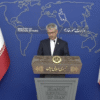
Iranian Foreign Ministry spokesperson Esmaeil Baghaei confirmed that a proposal transmitted through Pakistani mediators is currently under review.
Iranian officials stated that the talks focus primarily on securing a full cessation of hostilities, rejecting claims that nuclear issues are central to the current negotiations and emphasizing that de-escalation remains the priority.
These developments come ahead of a planned summit between Donald Trump and Xi Jinping in Beijing, expected to address regional security, energy supply stability, maritime security, and economic relations.
Analysts say the summit could provide a key diplomatic opportunity to coordinate international responses and reduce escalation risks.
As negotiations continue, attention remains focused on developments in the Strait of Hormuz, where military and diplomatic dynamics continue to shape the trajectory of the crisis.