











Border tensions between Afghanistan and Pakistan intensified this week after Afghan authorities accused Pakistani forces of carrying out cross-border artillery strikes in Afghanistan’s eastern Kunar province, an incident that threatens to undermine fragile regional peace efforts established earlier this year.
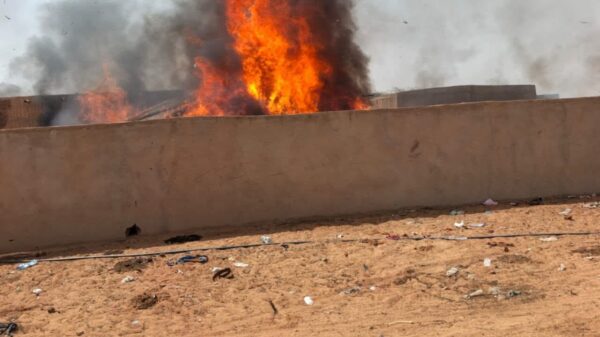
According to Afghanistan’s Taliban-led government, the strikes occurred on May 4 and targeted civilian areas inside Kunar province. Deputy government spokesman Hamdullah Fitrat stated that at least three civilians were killed and 14 others injured during the bombardment. Afghan officials also reported significant damage to civilian infrastructure, including two schools, two mosques, and a local health center.
Kabul condemned the incident as a violation of Afghan sovereignty and international law, accusing Pakistan of escalating instability along the already volatile frontier.
Pakistan, however, has firmly denied the allegations. In an official response, Islamabad’s Ministry of Information and Broadcasting rejected the Afghan claims, describing them as inconsistent with available evidence and characterizing them as part of a broader “propaganda effort” aimed at discrediting Pakistan internationally.
Pakistani authorities reiterated that military activities conducted near the border are “intelligence-based, selective operations” designed to target militant hideouts associated with the Tehrik-e-Taliban Pakistan and affiliated armed groups.
The latest confrontation presents a serious challenge to the fragile de-escalation framework brokered earlier this year during Chinese-mediated peace talks held in Urumqi in April 2026. Despite the agreement, intermittent cross-border exchanges and mutual accusations have continued to strain relations.
At the center of the dispute remains Pakistan’s longstanding allegation that the Afghan Taliban provides sanctuary to militants responsible for attacks inside Pakistani territory, a claim Kabul has repeatedly denied.
Security analysts warn that the continuing cycle of retaliation risks further destabilizing the region. Experts from organizations such as the Pak Institute for Peace Studies have noted that operational precision remains a major concern in cross-border military actions.
International observers, including United Nations experts, have repeatedly called for restraint and adherence to international humanitarian law.
As of Tuesday, neither side had announced new diplomatic initiatives, and the situation along the Afghanistan-Pakistan border remains tense and highly fluid.