








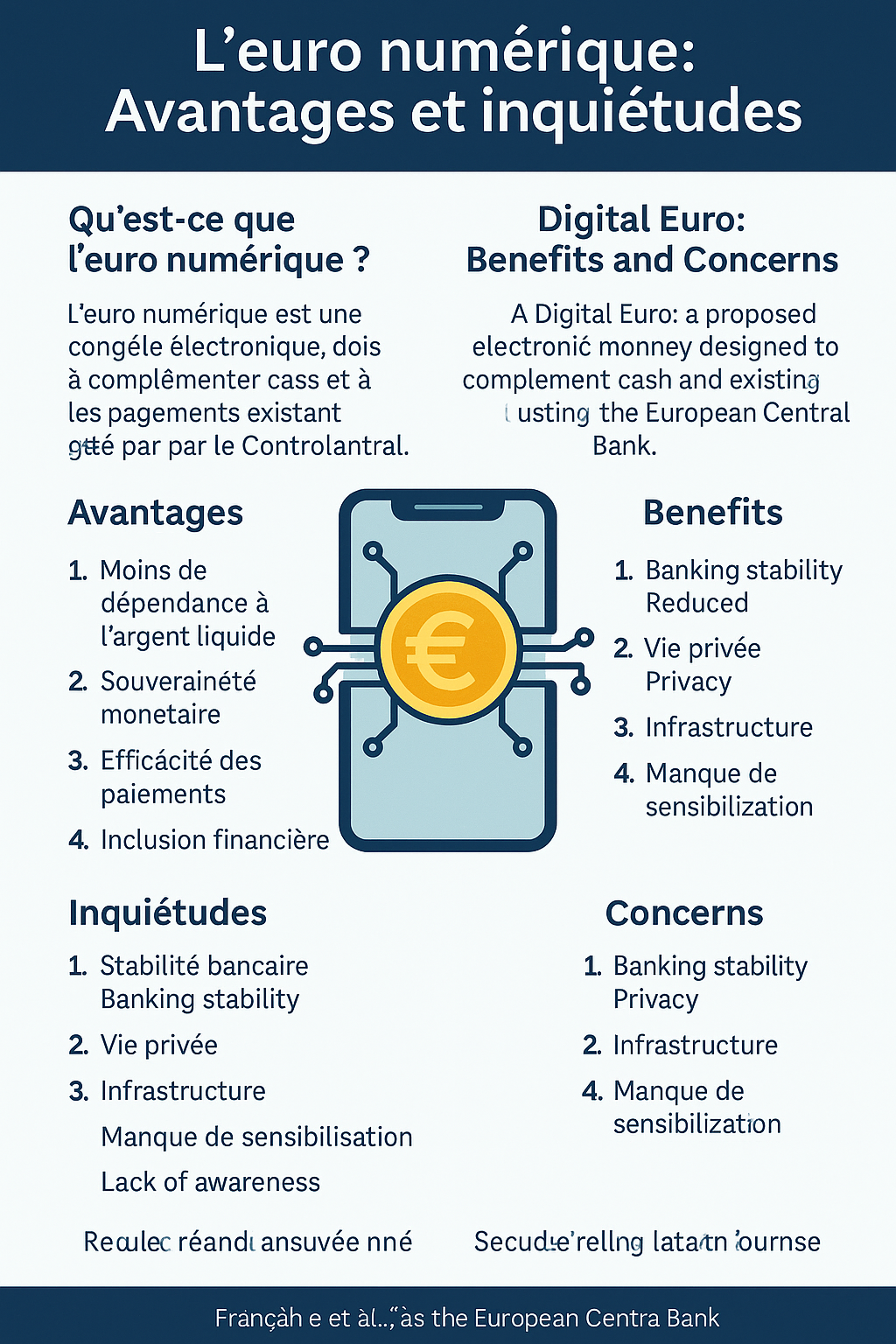
The Digital Euro project, initiated by the European Central Bank (ECB), aims to modernize payments across the Eurozone. While promising more efficient transactions and stronger monetary sovereignty, the digital currency also raises significant concerns among experts.
What is the Digital Euro?
This new form of currency would be accessed via a specialized app, allowing users to send, receive, and manage their funds securely. All merchants across the Eurozone will be required by law to accept digital euro payments.
How will it work?
- The ECB will issue the currency, but licensed payment providers such as banks will manage user accounts.
- Offline transactions will ensure high levels of privacy, similar to cash.
- A holding cap of around €3000 per person is expected, to prevent mass withdrawal from traditional bank deposits.
Benefits:
- Less reliance on cash
- Enhanced European monetary sovereignty
- Faster, lower-cost payments
- Improved financial inclusion
Concerns:
- Potential instability in the banking sector
- Privacy and data protection worries
- Technical infrastructure requirements
- Lack of public awareness and possible hesitation to adopt
In this article: