





The United States has deployed a small contingent of military personnel to Nigeria, marking a significant shift in bilateral relations from diplomatic pressure toward limited, direct military cooperation, according to official statements from U.S. Africa Command.
General Dagvin R.M. Anderson, commander of U.S. Africa Command, confirmed the deployment during a briefing on February 3, 2026, describing it as an effort to provide “unique capabilities” in support of Nigeria’s counterterrorism operations against Boko Haram, the Islamic State West Africa Province, and the recently designated extremist group Lakurawa.
Intelligence-Focused Mission
U.S. officials said the deployment is not a combat mission, and the exact number of personnel has not been disclosed. The contingent is expected to focus on intelligence collection, surveillance, reconnaissance, and tactical coordination with Nigerian security forces.
The move follows reports that U.S. forces have already been conducting reconnaissance flights over Nigerian territory, operating from airfields in neighboring Ghana. U.S. Africa Command has expressed concern over the transnational spread of militant groups in Nigeria’s northwest and northeast, warning that continued instability poses wider risks to West Africa and the Sahel.
Preceded by December Airstrikes
The deployment comes after a sharp escalation in U.S. military involvement late last year. On December 25, 2025, President Donald Trump authorized Tomahawk missile strikes against Islamic State–linked camps in Sokoto State. The strikes were launched from the U.S. Navy destroyer Paul Ignatius.
The Trump administration described the operation as a response to what it termed the persecution of Christians in northern Nigeria. Nigerian authorities rejected that characterization, stating that militant groups target both Christians and Muslims and that the violence is driven by terrorism rather than religious identity.
Diplomatic Tensions Over Religious Freedom
The military cooperation unfolds amid diplomatic tensions between Washington and Abuja. In October 2025, the United States designated Nigeria as a Country of Particular Concern under the International Religious Freedom Act, straining bilateral relations.
President Trump has repeatedly accused Nigerian authorities of failing to protect Christian communities and has warned of further military action if conditions do not improve. The Nigerian government, led by President Bola Ahmed Tinubu, has disputed that narrative while continuing to accept U.S. intelligence and technical support in its fight against insurgent groups.
Local Reactions and Risks
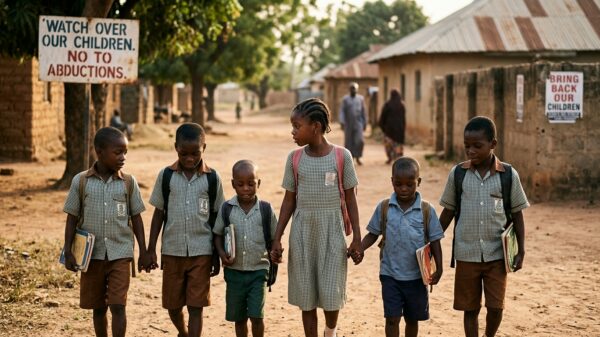
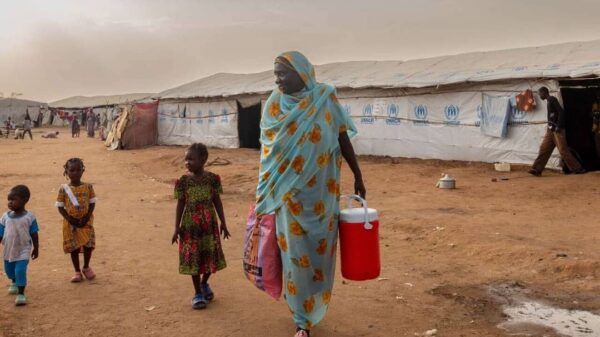
The deployment has drawn mixed reactions within Nigeria. In parts of the violence-affected northwest, some residents have welcomed the prospect of enhanced intelligence support after years of insecurity and mass displacement.
Others have voiced concern that the presence of U.S. forces raises questions about national sovereignty. Analysts also warn that a visible American military role in predominantly Muslim regions could be exploited by extremist groups for recruitment purposes, potentially inflaming anti-Western sentiment.
As Nigeria continues to confront multiple armed groups across vast and challenging terrain, the limited U.S. deployment signals Washington’s growing readiness to move beyond diplomatic pressure, even as the longer-term political and security consequences remain uncertain.