

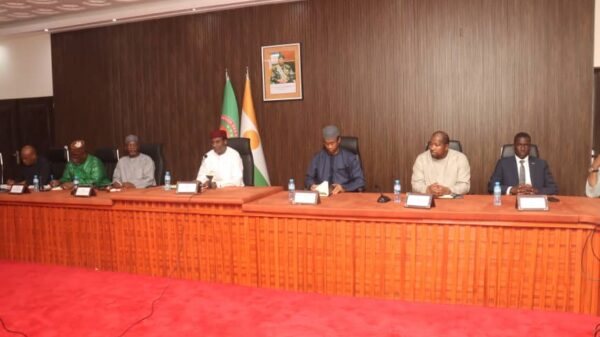




Niger’s head of state, General Abdourahamane Tiani, concluded a two-day visit to Algiers on Sunday in what both governments described as a turning point in relations, formally ending months of diplomatic strain between Niger and Algeria.
Algerian authorities characterised the Feb. 15–16 visit as a “fraternal and working” summit, signalling renewed strategic cooperation centred on regional security and energy infrastructure.
Diplomatic restoration
The diplomatic thaw began on Feb. 12, when Algeria announced the return of its ambassador, Ahmed Saadi, to Niamey. Niger’s ambassador to Algeria, Aminou Malam Manzo, simultaneously resumed his duties in Algiers in what officials described as a coordinated step toward reconciliation.
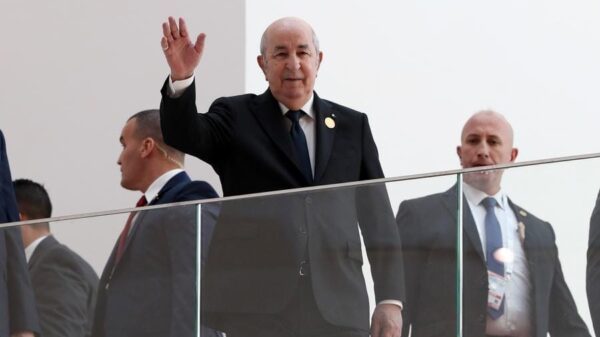
President Abdelmadjid Tebboune personally received Tiani at Houari Boumediene International Airport. The presence of Algeria’s army chief of staff and energy minister underscored the strategic weight of discussions, which focused heavily on border security coordination and cross-border energy projects.
In a statement, the Algerian presidency said the visit launched a “new dynamic” in bilateral ties aimed at leveraging the two countries’ capacities and overcoming tensions linked to earlier disagreements involving the Alliance of Sahel States.
Infrastructure and energy priorities
At the centre of the rapprochement are major transnational infrastructure projects requiring long-term stability.
Chief among them is the Trans-Saharan Gas Pipeline (TSGP), a proposed $13 billion project designed to transport up to 30 billion cubic metres of Nigerian gas annually to European markets via Niger and Algeria.
Officials also highlighted the Trans-Saharan Highway, intended to connect landlocked Sahelian states with Mediterranean ports, and ongoing cooperation around the Kafra Oil Block in northern Niger, operated by Algeria’s state energy firm Sonatrach.
The Kafra block is estimated to hold more than 260 million barrels of reserves and is seen as a key asset in Niger’s upstream development plans.
From security friction to economic pragmatism
Relations cooled sharply in April 2025 after a drone incident along the shared border. Niger, alongside Mali and Burkina Faso, accused Algeria of interference, while Algiers said it had acted to defend its airspace.
The diplomatic freeze lasted about 10 months and raised concerns over joint security coordination and infrastructure investments.
The February summit signals a shift toward economic pragmatism, with both governments appearing to prioritise strategic projects and regional stability over political disagreements.
Regional implications
Algeria has framed the restoration of ties as a priority for regional stability and continental integration, reflecting its broader ambition to reassert diplomatic influence in the Sahel.
For Niger, the renewed partnership provides economic leverage and diplomatic support as Sahelian states recalibrate regional alliances.
Analysts say the Tiani–Tebboune meeting could mark the emergence of a strengthened North Africa–Sahel axis built around energy interdependence, infrastructure integration and coordinated security policy.